Cooling project for an olive sector company in Seville with international projection
A company in the olive sector located in Seville, with strong international projection, needed to optimize its industrial cooling system to meet production growth and new process requirements in the plant.
The existing installation had operational limitations, especially when supplying processes with very different thermal characteristics.
What need did the plant have?
There was a cooling deficit, but the main problem was not the lack of capacity; rather, the existing cooling tower was simultaneously serving very different processes and had as consumers 1 autoclave and 2 pasteurizers.
 Why is installing another identical tower not always the best solution?
 Why is installing another identical tower not always the best solution?
When a plant grows, it is not always advisable to replicate the same existing solution.
In this case, processes with different needs coexisted:
- equipment with clean and very hot cooling water (autoclave)
- processes with higher dirt load and greater maintenance needs (pasteurizers)
This made it more efficient to separate the cooling circuits according to the type of process, rather than oversizing a single installation.
What solution was implemented?
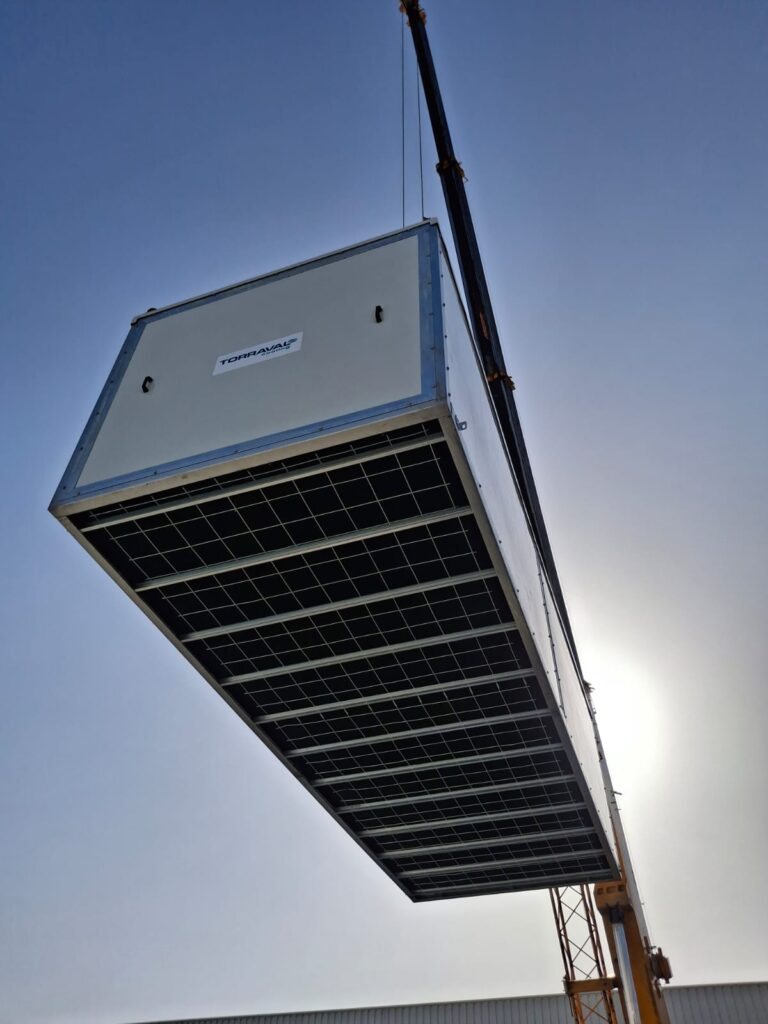
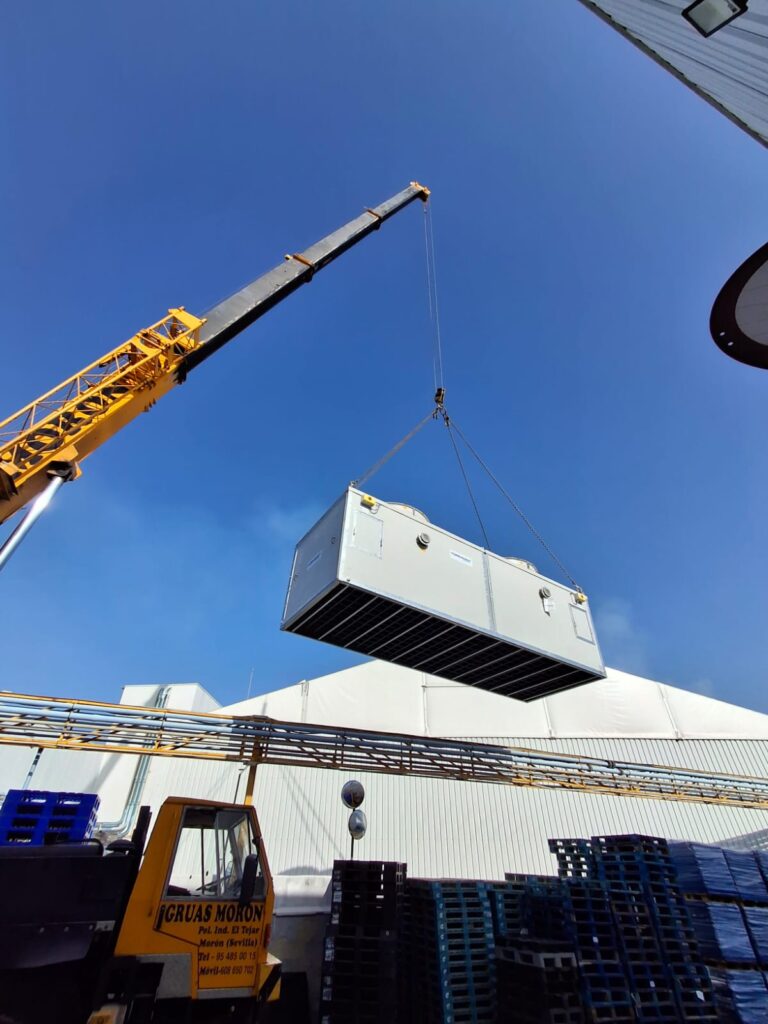
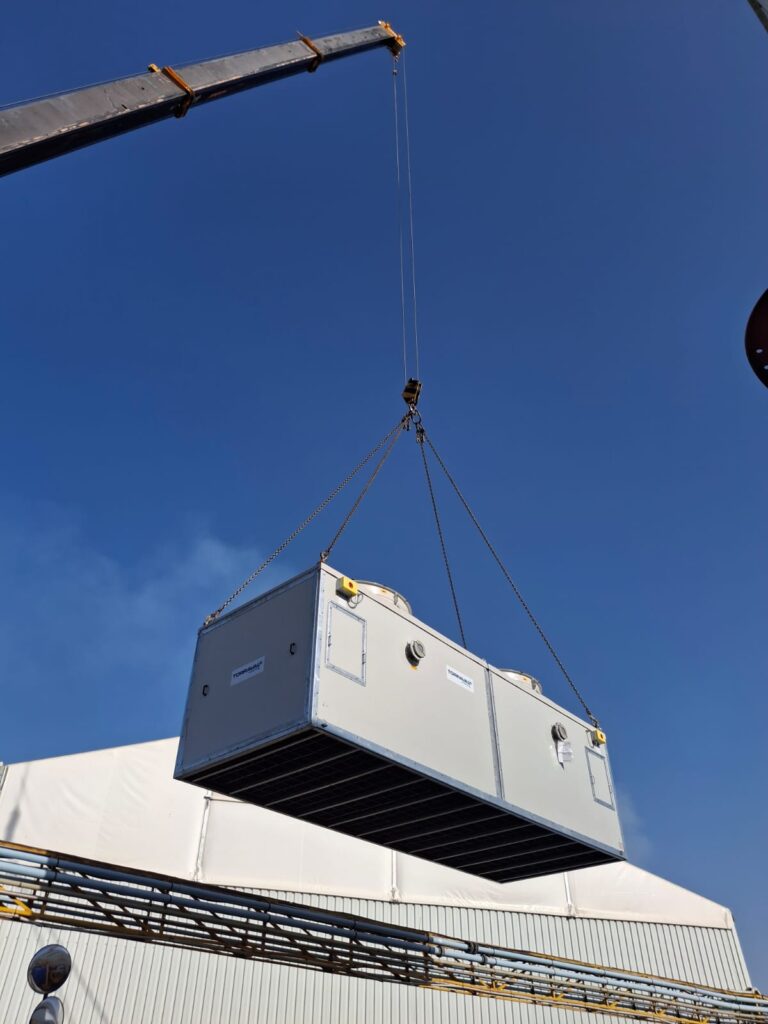
A cooling tower 1 PME 6204 E GSS ATT WITH 2 INDEPENDENT BASINS, one per cell was supplied, designed for a flow rate of 200 m3/h and GSS grid fill prepared for suspended solids, intended to operate in cooling both processes independently and for a wet-bulb temperature of 25º.
Additionally, the distribution and fill system was manufactured in PP (polypropylene), suitable for withstanding high process temperatures of up to 75ºC.
The tower was equipped with 2 variable frequency drives to regulate motor rotation speed according to the outlet water temperature, allowing independent control of both processes.
 How is maintenance improved in an industrial cooling tower?
 How is maintenance improved in an industrial cooling tower?
The installation incorporated several elements designed to facilitate access and increase reliability:
- 2 access doors
- 2 fully removable walls
- tropicalized motor
- PTC thermal protection probe
- heater to prevent condensation inside the motor
Additionally, the tower was installed on a metal structure elevated approximately 2 meters above the ground, next to another existing tower in the plant.
What benefits does separating cooling circuits provide?
 What benefits does separating cooling circuits provide?
This strategy allows:
- improving operational reliability
- reducing maintenance
- avoiding production downtime
- optimizing thermal performance
- facilitating future expansions
In complex industrial installations, a good cooling strategy is not just about adding capacity, but about properly designing how each process should operate.